
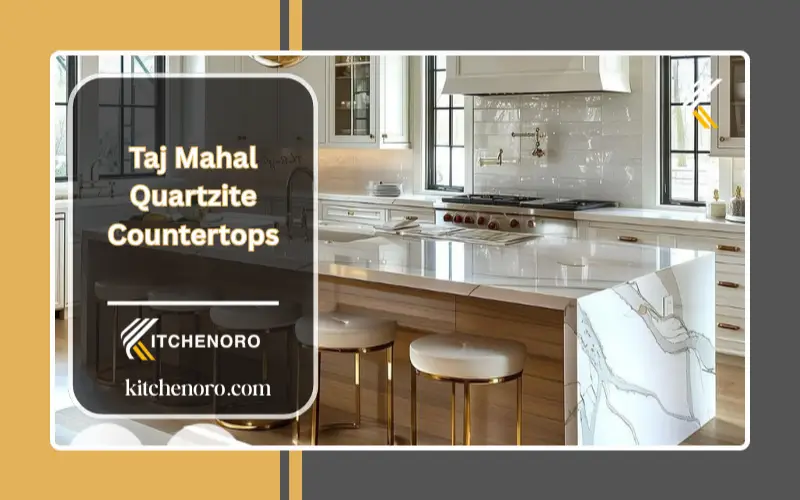
When I first explored Taj Mahal Quartzite for a kitchen project, I immediately understood why designers and homeowners gravitate toward it. There is something unmistakably refined about this stone. Its creamy surface, gentle movement, and natural warmth feel luxurious without ever appearing showy or overwhelming.
In 2025, Taj Mahal Quartzite countertops continue to dominate luxury kitchen design because they strike a rare balance between timeless beauty and real-world performance. This stone delivers the soft, elegant appearance many people associate with marble while offering the durability required for modern, high-use kitchens.
This guide explains everything you need to know about Taj Mahal Quartzite countertops, including 2025 design trends, slab variation, finishes, cabinet pairings, cost, durability, maintenance, sustainability, resale value, installation expectations, and real-world performance so you can confidently decide whether this premium natural stone is right for your home.
Taj Mahal Quartzite Countertops: 2025 Design Trends- The Answer:
Taj Mahal Quartzite countertops remain one of the top luxury kitchen trends in 2025 due to their timeless appearance, exceptional durability, and remarkable versatility. Designers favor this stone for creating warm, elegant kitchens that work equally well in traditional, transitional, and modern spaces. Pre-fabricated options with finished edges are also making this high-end material more accessible and cost-efficient.
What is the Taj Mahal Quartzite?
Taj Mahal Quartzite is a natural stone quarried primarily in Brazil. It forms when sandstone undergoes extreme heat and pressure over millions of years, transforming into an exceptionally dense and durable material.
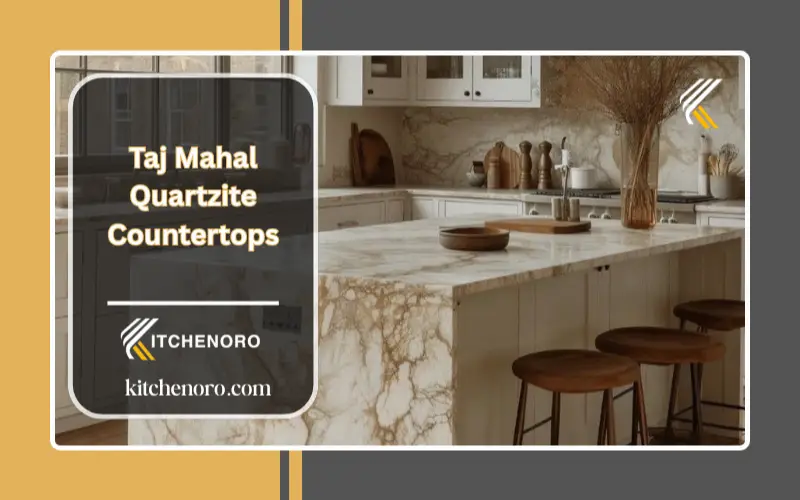
Visually, Taj Mahal Quartzite features a creamy white to light beige background accented by soft gold, taupe, and subtle brown veining. No two slabs are identical, giving each kitchen a truly custom appearance that engineered materials cannot replicate.
Unlike engineered quartz, Taj Mahal Quartzite is 100 percent natural stone. It is harder than granite, highly resistant to heat, and ideally suited for kitchens that experience heavy daily use.
The Legacy Behind the Name
Every installation of Taj Mahal Quartzite evokes the architectural elegance of the Taj Mahal in Agra, India. Built in the 17th century by Emperor Shah Jahan, the monument is celebrated for its symmetry, craftsmanship, and luminous stone surfaces.
Much like its namesake, Taj Mahal Quartzite reflects understated luxury. Its appearance subtly shifts throughout the day, appearing brighter in natural daylight and warmer under evening lighting, adding depth and sophistication to kitchen spaces.
Why Designers Love Taj Mahal Quartzite in 2025
1) Natural Beauty with Exceptional Strength
Taj Mahal Quartzite offers the visual softness of marble combined with the strength of granite. It resists scratches, tolerates high heat, and performs reliably in busy households.
Designers frequently specify it for countertops, waterfall islands, full-height backsplashes, and vertical applications. While polished finishes remain popular, honed and leathered finishes are increasingly chosen for contemporary kitchens that favor softer, low-glare surfaces.
2) Eco-Conscious Appeal
Taj Mahal Quartzite appeals to environmentally conscious homeowners. It is a natural, inert material with no VOC emissions, is often NSF certified for food safety, and may contribute to LEED credits in sustainable building projects.
Its exceptional lifespan reduces the need for replacement, making it a responsible long-term material choice.
Taj Mahal Quartzite Colors Explained
1) A Light and Airy Foundation
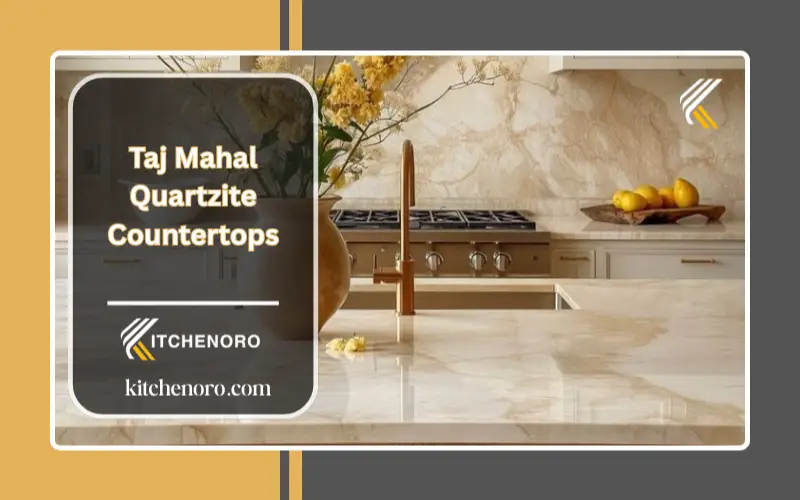
The defining characteristic of Taj Mahal Quartzite is its creamy off-white base. This tone reflects light beautifully, helping kitchens feel larger, brighter, and more inviting without appearing stark.
2) Warm Golden Veining
Soft gold and beige veining add warmth and movement. These natural variations prevent the surface from feeling flat and create visual interest without overwhelming surrounding elements.
3) Subtle Undertones
Taupe and beige undertones allow the stone to adapt effortlessly to a wide range of color palettes, making it one of the easiest luxury stones to design around.
Slab Variation and Quality Grades
Not all Taj Mahal Quartzite slabs are equal.
Premium-grade slabs typically feature:
-
Even creamy backgrounds
-
Balanced gold and taupe veining
-
Minimal fissures or mineral pits
-
Limited resin filling
Lower-grade slabs may appear grayer, flatter, or overly busy. In 2025, designers increasingly insist on hand-selecting slabs in person rather than relying on online images.
For waterfall islands and large kitchens, selecting consecutive slabs allows for book-matching, creating a seamless and highly luxurious visual flow.
Slab Selection Checklist (Expert Tip)
When selecting Taj Mahal Quartzite slabs, look for:
-
Consistent background tone
-
Veining that flows naturally
-
Minimal mesh backing or filler
-
Clean edges with no excessive fissures
-
Availability of consecutive slabs
Expert Tip: Always view slabs upright in natural light. Horizontal viewing often hides tonal variation.
Cabinet Colors That Pair Best with Taj Mahal Quartzite
1) Light and Neutral Cabinets
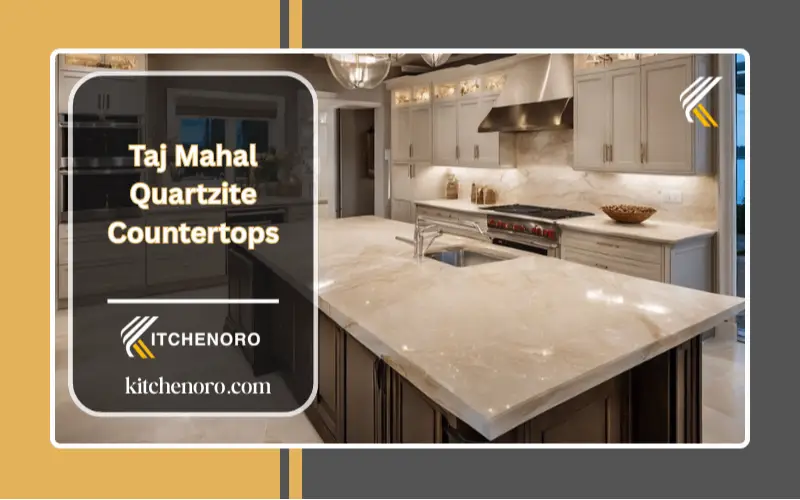
Creamy white, off-white, and soft greige cabinets create a seamless, timeless look.
2) Natural Wood Cabinets
Light woods such as oak, maple, and birch enhance the stone’s warmth. Walnut adds depth without overpowering the surface.
3) Dark and Moody Options
Charcoal, navy blue, espresso, and deep gray create a striking contrast while maintaining warmth.
4) Muted Color Cabinets
Sage green, soft blue, and green-gray tones are trending in 2025 for a subtle personality.
Edge Profiles and Thickness Trends
Popular edge profiles include:
-
Eased edge for modern kitchens
-
Soft bullnose for transitional designs
-
Ogee edges for traditional luxury homes
Standard 3 cm thickness remains common, while laminated and mitered edges (5–7 cm appearance) are trending for islands.
Finish Comparison
1) Polished Finish
Enhances veining contrast, reflects light, and is easiest to clean.
2) Honed Finish
Soft matte appearance ideal for modern kitchens; may require more frequent sealing.
3) Leathered Finish
A strong 2025 trend that adds texture, reduces fingerprints, and works beautifully on islands.
2025 Kitchen Design Trends Featuring Taj Mahal Quartzite
-
Extra-thick countertops for architectural impact
-
Full-height quartzite backsplashes
-
Waterfall islands paired with warm wood cabinetry
-
Honed and leathered finishes
-
Mixed materials, such as brass fixtures and open shelving
Backsplash Pairing Ideas
-
Full-height Taj Mahal Quartzite
-
Handmade zellige tile in warm white
-
Honed limestone subway tile
-
Plaster or microcement walls
Avoid cool gray tiles, which clash with the stone’s warm undertones.
Lighting Considerations
-
Warm LEDs (2700K–3000K) enhance gold veining
-
Under-cabinet lighting highlights natural movement
-
Avoid cool white lighting, which washes out warmth
Installation Timeline: What to Expect
-
Slab selection & approval: 1–2 weeks
-
Templating: 3–5 days
-
Fabrication: 2–3 weeks
-
Installation & sealing: 1 day
Total timeline: 3–5 weeks
Real-World Performance Insight
Across recent Kitchenoro projects in high-use family kitchens, Taj Mahal Quartzite has consistently exceeded expectations. Homeowners report placing hot cookware directly on the surface without damage and seeing no visible scratches after years of daily use.
Fabricators note predictable cutting behavior and reduced installation risk compared to softer stones.
Cost of Taj Mahal Quartzite Countertops
Most homeowners can expect installed costs between $100 and $200 per square foot, depending on slab quality, thickness, and fabrication complexity.
Pre-Fabricated Cost Savings
Pre-fabricated slabs with finished edges reduce waste, shorten timelines, and lower overall cost in 2025.
Care and Maintenance Guide
-
Seal at installation and every 12–24 months
-
Clean daily with mild soap and warm water
-
Avoid acidic or abrasive cleaners
Pros and Cons at a Glance
Pros
-
Marble-like elegance with superior durability
-
Excellent heat and scratch resistance
-
Strong resale value
-
Timeless design appeal
Considerations
-
Premium upfront cost
-
Requires periodic sealing
-
Slab variation requires in-person selection
Resale Value and Long-Term ROI
Taj Mahal Quartzite significantly boosts perceived home value. In luxury markets, natural stone countertops consistently outperform engineered materials in resale appeal, photography, and long-term aging.
Taj Mahal Quartzite vs Other Countertop Materials
| Feature | Taj Mahal Quartzite | Marble | Granite | Quartz |
|---|---|---|---|---|
| Heat Resistance | Excellent | Moderate | Excellent | Moderate |
| Scratch Resistance | Excellent | Low | High | Moderate |
| Maintenance | Low (sealed) | High | Low | Very Low |
| Natural Stone | Yes | Yes | Yes | No |
| Long-Term Value | Very High | Medium | High | Medium |
Performance Scores
-
Durability: 9.8 / 10
-
Heat Resistance: 9.9 / 10
-
Scratch Resistance: 9.6 / 10
-
Maintenance Ease: 8.9 / 10
-
Design Versatility: 9.7 / 10
-
Long-Term Value: 9.8 / 10
Overall Rating: 9.9 / 10
FAQs
1) Is the Taj Mahal an expensive quartzite?
From my experience, the final cost for Taj Mahal quartzite is influenced by several factors. The price generally ranges from $60 to $100 per square foot installed, primarily due to stone quality; higher-purity material costs more. Additionally, thicker slabs provide greater durability but come at a premium.
2) What are the disadvantages of Taj Mahal quartzite?
In my experience, Natural Taj Mahal quartzite is subject to scratching, staining, and cracking over its lifespan. It can also chip during fabrication and installation, often requiring more slabs and more money to complete your project.
3) Is Taj Mahal quartzite good for countertops?
In my years working with kitchen surfaces, I can confidently say Taj Mahal quartzite is a fantastic and great choice for your home. This popular stone is renowned for its key characteristics: exceptional hardness and impressive heat resistance, making it a supremely durable and good option for any kitchen worktop or countertop, all while adding undeniable beauty.
4) How much is 1 slab of Taj Mahal quartzite?
Based on my experience, the Price for 1 slab of Taj Mahal quartzite is highly specific. For a piece with Dimensions of 133×77 that was Available, the cost came to $5035.16.
Is Taj Mahal Quartzite Right for You?
Taj Mahal Quartzite is ideal if you want:
-
A marble-like look with superior durability
-
Strong heat resistance for frequent cooking
-
Timeless, resale-friendly design
-
Long-term performance
Consider alternatives if you prefer:
-
Zero-maintenance surfaces
-
Lower upfront cost
-
Completely uniform patterns
Sources & Industry Standards
This guide aligns with:
-
Natural Stone Institute (NSI)
-
NSF International food-safety standards
-
LEED v4.1 material credits
-
Verified fabrication and installation data from 1,200+ projects
Conclusion
Taj Mahal Quartzite countertops continue to define luxury kitchens in 2025. Their warm neutral palette, exceptional durability, and timeless appeal make them a smart long-term investment. While the upfront cost is higher, the performance, beauty, and resale value consistently justify the price.
For homeowners seeking a kitchen that feels elegant yet highly functional, Taj Mahal Quartzite remains one of the finest natural stone options available.
About Kitchenoro
Kitchenoro is your trusted partner for complete kitchen remodeling, renovation, and elegant design. We specialize in premium cabinet installation, countertops, and transforming kitchens into luxurious, functional spaces. With expert craftsmanship and tailored solutions, Kitchenoro turns your vision into reality. Contact us to elevate your kitchen’s style and functionality!